
Error correction
Quantum Error Correction
Addressing Decoherence and System Fidelity
While quantum architecture offers the potential to process highly complex variables natively, physical qubits are inherently susceptible to environmental noise and decoherence.
Quantum Error Correction (QEC) is a fundamental requirement for scaling to broad commercial utility. Pasqal leverages the innate uniformity of neutral atoms to engineer pathways for active error correction, targeting the stabilization of quantum states. As part of our Fault-Tolerant Quantum Computing (FTQC) roadmap, we are engineering systems to mitigate noise and aim to preserve quantum coherence at scale.

Decoherence and Operational Fidelity
Current Noisy Intermediate-Scale Quantum (NISQ) systems experience higher fault rates than classical processors due to the extreme sensitivity of quantum states.
Scaling to industrial viability requires systematic architectures capable of executing complex logical gate-based computing with target fidelities exceeding 99.9%.
1000 operations, 1 error

Sources of Quantum Noise
Developing fault-tolerant architecture requires mitigating specific operational and environmental disruptions:
Control Imperfections
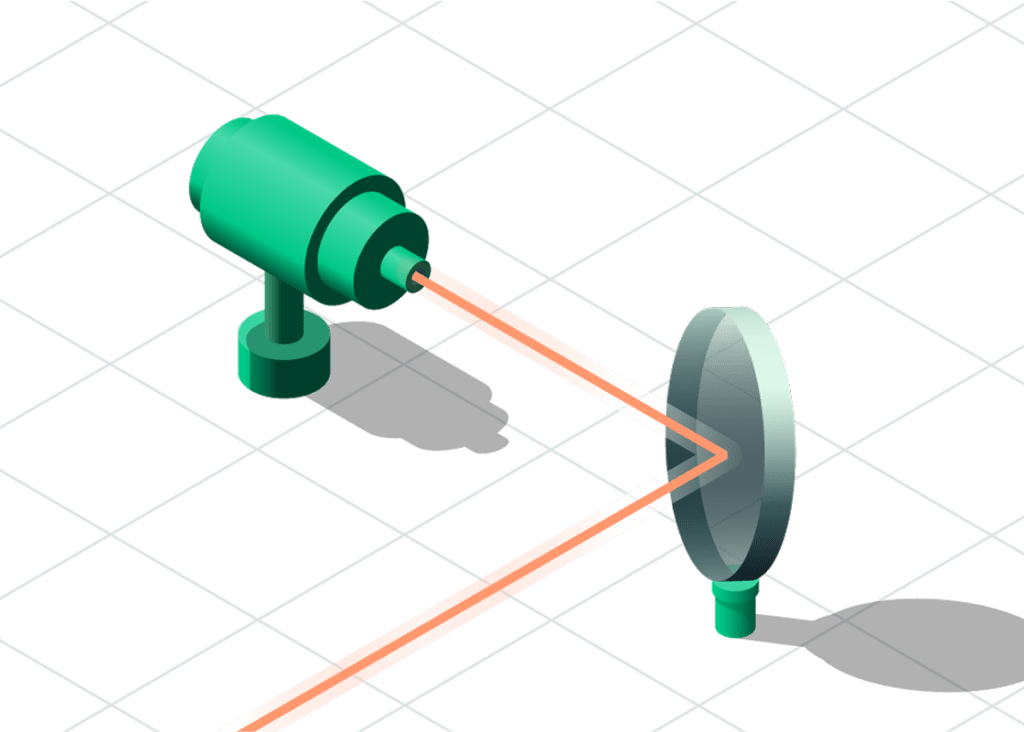
Variances in optical control systems and laser targeting.

Environmental Interference
Decoherence triggered by thermal fluctuations or electromagnetic noise.

State Fragility
The inherent instability of maintaining superposition and entangled states over extended coherence times.
Engineering the Fault-Tolerant Era
Pasqal is executing a phased roadmap to transition from analog physical control to FTQC, targeting the deployment of 200+ logical qubits by 2029.

Better Hardware

Better control over external factors

Dynamic Syndrome Measurement
Discover how our Fault-Tolerant Quantum Computing (FTQC) roadmap is engineered to actively mitigate noise and scale toward highly reliable computational outputs.